
HD Movies - movies and series online, free and in HD
HD Movies is the largest shelf on this network: 690 films and 137 series, with action and drama leading at 347 and 332 titles. Everything streams in HD, without sign-up, from 1972 through 2026.

Pushpa 2 – The Rule
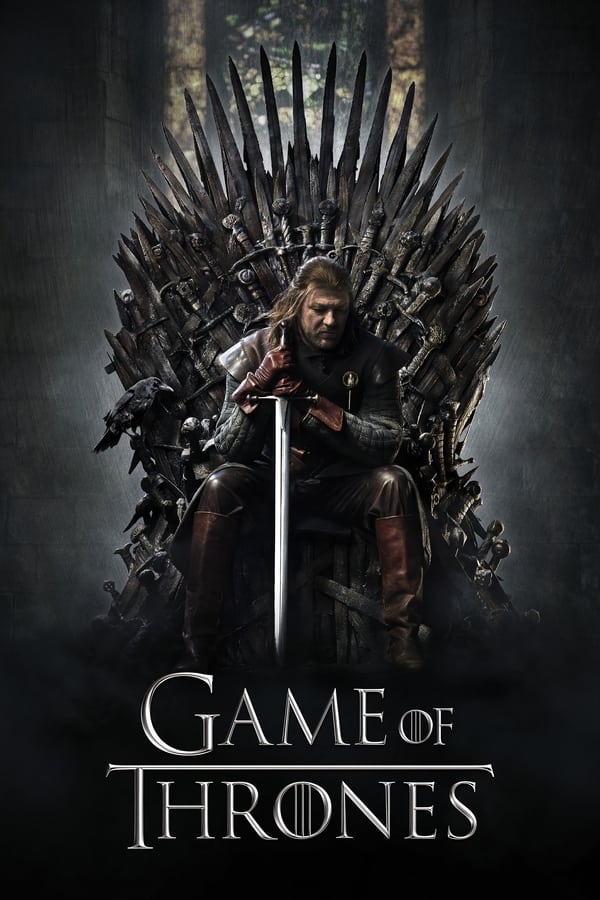
Game of Thrones

Panchayat

Crakk: Jeetega… Toh Jiyegaa
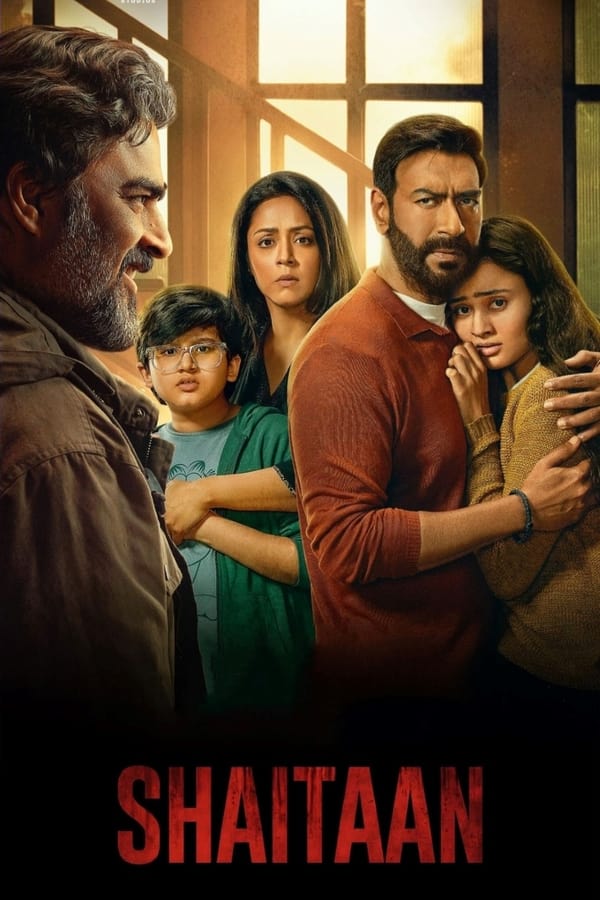
Shaitaan

Mirzapur
There is a particular kind of evening that quietly ruins a film habit. You have two hours, maybe two and a half. You open your watchlist, which holds sixty-three things, and you scroll. Nothing is wrong with any of them. That is the problem. Twenty minutes later you are rewatching the third episode of a comedy you have seen four times, and the list is one item longer because you added something during the scroll. Nothing was decided, nothing was watched, and some of the pleasure you take in films was spent on admin.
The usual diagnosis is a lack of discipline, or too much choice. Neither is quite right. A watchlist is a shopping list pretending to be a plan, and those are different documents. A shopping list works because you take it to a shop where everything is in reach. A watchlist describes things you intend to do across months, in moods you cannot predict, in gaps of time you have not measured. As an inventory it is fine. As a decision-making tool at nine o'clock on a Tuesday it fails, and it feels like a personal shortcoming rather than a design flaw.
Why length makes choosing harder
In 2000, Sheena Iyengar and Mark Lepper ran an experiment with a supermarket tasting booth. Shoppers who met twenty-four varieties of jam were more likely to stop than those who met six, and far less likely to buy: roughly 3 per cent of the large-display group purchased, against about 30 per cent of the small-display group. The honest version is more interesting. A 2010 meta-analysis by Benjamin Scheibehenne, Rainer Greifeneder and Peter Todd found that across dozens of experiments the average choice-overload effect was close to zero. The effect is real but conditional: it appears when the chooser has no settled preference, when options are hard to compare, and when nothing obviously rules anything out.
That describes a watchlist at nine o'clock at night with some precision. No fixed preference, options that cannot be compared — a 96-minute noir against a seven-hour Hungarian epic against the second season of something — and no criterion that eliminates any of them. Barry Schwartz's 2004 book The Paradox of Choice gave the idea its popular shape, borrowing Herbert Simon's distinction between maximisers, who keep hunting for the best option, and satisficers, who take the first that clears a threshold. Schwartz's point was not that choice is bad, but that unconstrained choice makes the threshold impossible to locate.
Volume is the other pressure. Catalogues are lopsided by nature. HD Movies lists 828 published titles, and the two deepest shelves are Action at 347 and Drama at 332, with release years running from 1972 to 2026. Nobody intends to watch all of that; the figure is a reminder that a streaming service is not a syllabus. Any plan that amounts to getting through a catalogue has already gone wrong. It is a shelf, and shelves are for browsing.
The shortlist: three titles, nothing else visible
The most useful change is to stop treating the watchlist as the thing you look at. Keep it, but demote it. What you look at on a given night is a shortlist: three titles, chosen in advance, with a line of reasoning attached to each. Three is not arbitrary. Two feels like a coin toss and often collapses into neither; four or five brings back the comparison problem you were escaping. Three leaves room to be in a different mood from the one you predicted while staying small enough to hold in your head.
The line of reasoning matters more than the number. Beside each title, write eight or ten words explaining why it is there. For a night when you want to be unsettled. Because it runs 88 minutes and you keep failing to start anything long. That note does two jobs: it preserves the context that made you add the title, which is what evaporates after a month, and it lets you match a film to a mood instead of to a list position.
A title earns its place by passing three tests. You can say why you want it, in one sentence, without appealing to its reputation. You know what it costs in time — a rough runtime and, for a series, whether the first season resolves or ends on a hook. And it is available now rather than in a hypothetical future once you have subscribed to something else.
There is a fourth test that is harder to apply. Some titles are things you want to have seen rather than things you want to watch. Both feel like desire from the inside. The tell is what happens when you imagine starting: genuine wanting produces a small forward pull, while the other kind produces the flatness of an obligation. Most aspirational titles are canon, and canon belongs on a different list.
Rotation: one feature, one series, one wildcard
Watching three things at once sounds like the opposite of focus, yet it solves a problem a single queue cannot. Films and series fail at different speeds. A film is one decision and then it is over. A series is a commitment that can run for eighty-six episodes, as The Sopranos did, or sixty-two, as Breaking Bad did. If your only slot is occupied by a long series, you can go weeks without finishing anything, and never completing anything is what makes people abandon the list altogether.
The rotation is simple. Slot one holds a feature, ideally the shortest thing on your shortlist. Slot two holds exactly one series. Slot three is the wildcard: a documentary, a film from a decade you rarely visit, something under ninety minutes, a title you would not normally defend. The wildcard is the part people skip and the part that stops the arrangement becoming a treadmill of the same three genres. A broad catalogue such as HD Movies' is an advantage here, since the wildcard slot is easiest to fill when the shelf is wide.
Do the arithmetic once, honestly
Most viewing plans fail on arithmetic rather than enthusiasm. A film a week is fifty-two films a year; two a week is 104. That is already more than most people watch, and it is worth knowing which number you actually are. Series need their own sum. Sixty-two episodes of Breaking Bad at roughly forty-seven minutes is about forty-eight hours, which is two episodes a night for a month. Chernobyl runs five episodes and fits into a weekend. Slow Horses runs six episodes a season and behaves like a long film split into parts.
Knowing the shape of a commitment changes whether you start it. A forty-hour series is not a decision for ten o'clock on a Sunday night; it is a decision for daylight, with the next six weeks in view. This is also why weekly releases, which looked like a step backwards after the all-at-once era, remain a useful pacing device: the show does the scheduling for you.
One series, no exceptions
Running a comfort series alongside a prestige one is a strong temptation and usually fatal to the prestige one. Two series in progress means every evening involves a choice between them, and the comfort series wins most of those choices because it asks less. Keep one series in the active slot. The exception is a show you are rewatching on purpose, which belongs in the wildcard slot, labelled as a rewatch, so that it stops quietly competing with the thing you meant to watch.
Tracking that tells you something
Tracking has a poor reputation because most of it is measurement for its own sake. A number in the hundreds is satisfying and almost useless. What is worth keeping is narrow: a record of what you actually watched and a record of what you intend to watch, held as two documents. Mixing them is the commonest structural mistake, because a list containing finished and unfinished items becomes an archive of intentions rather than a plan.
The ledger can be minimal. Date, title, whether you finished it, and one line you would say to a friend afterwards. Thirty seconds a title. After three months it will tell you things no recommendation engine can: that you abandon almost everything over two and a half hours, that your hit rate with one particular director is high, that titles added on a Friday and watched on a Sunday tend to be good while the ones added at midnight sit there. That is real information about your taste, gathered by you, at no cost.
Formats, briefly
- A spreadsheet — unglamorous, searchable, easy to extend.
- A notes file — one line per title, good enough for most people.
- A public log — Letterboxd has carried watchlists since 2011; IMDb has collected ratings since 1990.
- Paper — a notebook by the sofa. The Criterion Collection has numbered its releases on the spine for decades; catalogue tracking long predates the app.
Leave out scores out of ten for everything and any metric that turns watching into a competition. The moment the ledger becomes a project, you will pick titles that are easy to log.
Rules for nights when nothing sounds right
Some evenings the shortlist is the problem: all three are fine and none is right. That is not a failure of the system, and the right response is not to reopen the full list. Have a rule that decides without you.
- The two-minute rule. If you cannot choose within two minutes, the shortlist is wrong for tonight. Take the shortest title and start it.
- The twenty-minute trial. Watch twenty minutes with no obligation to continue, then stop if it has not got you.
- Allow one deliberate rewatch a week. A sixth viewing of a comfortable comedy is not a betrayal; making it explicit removes the guilt.
- Mood first, title second. Choose the kind of evening you want, then read the notes.
When the list has grown too large
At some point a watchlist stops being a plan and becomes a monument to optimism: two hundred entries, half forgotten, a third unavailable, and a low hum of obligation every time you open it. The fix is one deliberate pass, done once, with a time limit.
- Freeze it. Add nothing for a week. New recommendations go into a separate unsorted note.
- Sort in one sitting. Three destinations: Now, Later, Gone. Now takes five titles at most. Later takes everything with a real intention behind it. Gone takes the rest.
- Apply the reason test. If you cannot say why you added it beyond the fact that it looked good, it goes to Gone — not because it is bad, but because you no longer have access to the version of yourself who wanted it.
- Separate the aspirational shelf. Long films are scheduling problems, not failures of will: Satantango runs over seven hours, Drive My Car nearly three. Give them a dated weekend.
- Give Later an expiry. Anything that has not moved in three months goes at the next pass. If a title cannot become urgent within a season, it was never urgent.
- Accept that some titles are for knowing, not watching. Reading about a film, hearing it discussed, understanding why it matters — these are legitimate ends.
Deleting a title costs nothing, which is why it feels wrong: a long list generates a sense of investment, and dropping an entry feels like writing off the time spent on it. Arkes and Blumer described this in 1985 as escalation of commitment, the tendency to keep paying into a course of action because of what has already been spent. The entry is the sunk cost, not the film, which still exists and is still findable on HD Movies when the mood arrives.
Finishing, and knowing when to stop
Completion is a poor measure of a film habit because it rewards endurance over judgement. Three outcomes are legitimate: you finish and you are glad, you finish and feel indifferent, you stop. The trouble is that the third is treated as a debt. Unfinished tasks stay active in attention in a way completed ones do not, an effect Bluma Zeigarnik described in the 1920s, which is why a series abandoned mid-season keeps surfacing long after a film you loved has faded. That noise is not evidence that the show deserves finishing.
Two rules keep this in proportion. For a series, give it three episodes; if you are still watching out of politeness rather than interest, stop and mark it dropped, deliberately, so it leaves the active list. For a film, use the twenty-minute trial and a second checkpoint at the halfway mark. Neither requires you to justify yourself to anyone.
Taste is built mostly out of abandoned things. Every dropped series is evidence about what you actually like, provided you notice why you dropped it. I do not care about this kind of intrigue. I need someone to root for. I do not want another story about a brilliant unhappy man. Written down, those sentences are worth more than the list they came from.
A watchlist you can keep
None of this needs an app, and most of it needs less than twenty minutes of setup. What it needs is acceptance of a smaller number than the one you would like. A list you can see all of, a shortlist you can decide from in under two minutes, one series running at a time, and a ledger that tells you the truth about your taste: that is the entire system. It will not get you through a catalogue, and it was never meant to. It will get you to the end of the year having watched perhaps fifty things you chose on purpose, which is a better achievement than a hundred chosen by default.
The version of this you can do tonight: write down five titles you genuinely intend to watch in the next fortnight, move everything else into a single dated note and close it, add one line beside each of the five explaining what it is for, then pick the shortest, start it, and watch twenty minutes before deciding anything.
Then repeat the small part weekly: five minutes, on a fixed day, to refill the shortlist from the closed note. The list will grow again. Lists do. The difference is that the list is no longer the thing you look at when deciding what to watch, and that alone is enough to turn a watchlist from a record of good intentions into a habit that survives a tired Tuesday.
Frequently asked questions
Is Hd Movies free to watch?
Yes. Every title on Hd Movies plays without a subscription, a payment or a trial. There is no account step either: open a film or an episode and the player starts.
Do I need an account to stream on Hd Movies?
No. Accounts are optional on Hd Movies and only exist for the watchlist and favourites. Browsing, searching and playback all work without signing in.
Can I watch Hd Movies on my phone or tablet?
Yes. The player is responsive, so the same title plays on a phone, tablet, laptop or TV browser. On mobile data, standard definition uses roughly a third of the bandwidth of HD.
How often does Hd Movies add new movies and series?
Hd Movies is topped up as new releases appear. The catalogue currently holds 828 title pages, and the newest additions sit at the top of the Movies and TV Series archives.
What video quality does Hd Movies stream in?
HD where the source allows it. Every listing is tagged HD, and the player adapts to your connection rather than forcing a single bitrate. Each title page shows the runtime, rating and cast so you know what you are opening.